
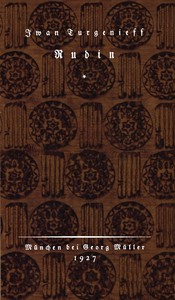
Rudin by Ivan Sergeevich Turgenev
The Story
We meet Dmitri Rudin at a country house owned by the wealthy widow Darya Lasunskaya. He's poor, but he immediately becomes the center of attention. His conversations about philosophy, society, and the future are like fireworks. He argues that to find truth and purpose, a person must be willing to sacrifice everything.
Natalya, Lasunskaya's seventeen-year-old daughter, is completely drawn in. She sees in Rudin a chance to escape her confined life and do something meaningful. When they confess their love for each other, it seems like a perfect match of idealistic minds. But when Natalya is ready to defy her mother and run away with him, Rudin's response changes everything. His grand talk about sacrifice meets its first real challenge, and the result is heartbreakingly quiet.
Why You Should Read It
This book feels incredibly modern. We all know a Rudin—the friend or coworker who is all passionate plans but never follows through. Turgenev doesn't paint him as a villain; he's a tragic figure, trapped by his own inability to act. You'll feel frustrated by him, but you might also see a little bit of that hesitation in yourself.
The real star for me, though, is Natalya. In just a few scenes, Turgenev creates a young woman of stunning depth and quiet strength. Her disappointment is the emotional core of the book. It’s a story about the gap between what we say and what we do, and the people who get hurt in that gap.
Final Verdict
Perfect for anyone who loves character studies or has ever been let down by a charismatic talker. It's a classic that reads like it was written yesterday. If you're new to Russian literature, this is a fantastic, short place to start—no huge cast of characters with multiple names, just a focused, piercing look at a very human flaw. You'll finish it in a sitting, but you'll think about it for much longer.
This text is dedicated to the public domain. Thank you for supporting open literature.






Mark King
10 months agoHonestly, the author's voice is distinct and makes complex topics easy to digest. I learned so much from this.