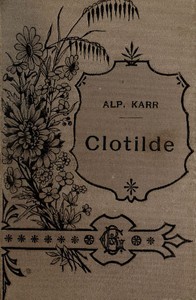
Clotilde by Alphonse Karr
First published in 1839, Clotilde is a classic French novel that feels surprisingly modern in its concerns. It’s a story about the gap between public image and private pain.
The Story
We meet Clotilde, a young woman admired in Parisian high society. She is married to a respectable but emotionally distant man, and her life is a carefully performed routine of parties and social calls. The plot unfolds not with dramatic events, but through her growing inner turmoil. She feels a profound emptiness and yearns for a life with more meaning and genuine connection, something her privileged world cannot provide. The central tension is watching her navigate this quiet desperation, wondering if she will break under the pressure or find a way to breathe.
Why You Should Read It
Karr’s real strength is his psychological insight. Clotilde isn’t a rebellious heroine in the obvious sense; she’s nuanced and real. Her struggle isn't against a villain, but against the subtle, smothering weight of social conformity. Reading it, you get a vivid, almost intimate portrait of 19th-century French life, but the core feeling—of being trapped by expectations—is timeless. It’s a slow, thoughtful burn of a book that makes you feel deeply for its protagonist.
Final Verdict
Perfect for readers who enjoy classic literature with a psychological edge, like the works of Jane Austen or Edith Wharton. Don’t pick this up for fast-paced action; pick it up for a compelling, character-focused study of a woman’s inner world. It’s a quiet, insightful novel that proves some struggles are universal, no matter the century.
This title is part of the public domain archive. You can copy, modify, and distribute it freely.